The short answer: authorization takes seconds; settlement takes 1–3 business days. But those two steps are very different things — and understanding the gap between them is critical for merchants managing cash flow, and for cardholders wondering why a charge is still showing as "pending."
This guide breaks down exactly how long a credit card payment takes to process at each stage of the transaction lifecycle, what causes delays, and what merchants can do to get funds into their accounts faster.
The Two Stages Every Credit Card Payment Goes Through
Most people assume a credit card payment is instant. From the cardholder's perspective it feels that way — the terminal beeps, the receipt prints, and the sale is done. But behind the scenes, a credit card transaction moves through two distinct stages before money actually changes hands.
Stage 1: Authorization (Seconds)
When a card is swiped, dipped, tapped, or entered online, the merchant's payment terminal or gateway sends an authorization request through the card network (Visa, Mastercard, Amex, Discover) to the cardholder's issuing bank. The bank checks the account for available credit, flags for fraud, and responds with an approval or decline — all within 1–3 seconds.
Authorization does not move money. It places a temporary hold on the cardholder's available credit for the transaction amount. The funds are reserved but not yet transferred.
Stage 2: Settlement (1–3 Business Days)
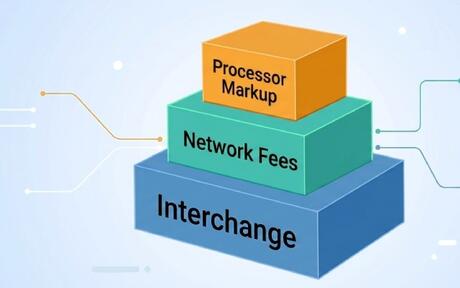
Settlement is when money actually moves. At the end of each business day, the merchant "batches" all authorized transactions and submits them to their acquiring bank (the merchant's bank) for processing. The acquiring bank then routes each transaction through the card network back to each issuing bank, which transfers the funds — minus interchange fees — to the acquiring bank, which deposits the net amount into the merchant's account.
This process takes 1–3 business days in most cases. Some processors offer next-day or even same-day funding for an additional fee.
Key distinction: When a cardholder sees "pending" on their bank statement, authorization has happened but settlement has not. The charge moves from pending to posted once settlement completes.
How Long Does Credit Card Processing Take — By Payment Type
| Payment Type | Authorization | Settlement (Funds Available) |
|---|---|---|
| In-person (chip / tap) | 1–3 seconds | 1–2 business days |
| In-person (swipe) | 1–3 seconds | 1–2 business days |
| Online / card-not-present | 2–5 seconds | 2–3 business days |
| Keyed / MOTO | 2–5 seconds | 2–3 business days |
| American Express (OptBlue) | 1–3 seconds | 2–3 business days |
| Contactless / mobile wallet | Under 1 second | 1–2 business days |
| ACH / eCheck (not a card) | Instant confirmation | 3–5 business days |
Card-not-present transactions (e-commerce, phone orders) consistently take longer to settle because they carry higher fraud risk. Processors and issuing banks apply more scrutiny before releasing funds.
The Full Credit Card Processing Lifecycle
Here's every entity involved in moving a credit card payment from the customer's tap to the merchant's bank account:
- Cardholder initiates payment at the terminal or checkout page.
- Payment gateway / terminal encrypts and transmits the transaction data.
- Acquiring bank (merchant's bank) receives the request and forwards it to the card network.
- Card network (Visa, Mastercard, etc.) routes the request to the issuing bank.
- Issuing bank approves or declines and sends the response back through the network.
- Merchant receives approval and completes the sale. (Authorization complete — typically under 5 seconds.)
- Merchant batches the day's transactions and submits for settlement — usually at end of business day.
- Acquiring bank receives the batch, requests funds from each issuing bank via the card network.
- Issuing banks transfer funds (minus interchange) to the acquiring bank.
- Acquiring bank deposits net funds (minus processing fees) into the merchant's account. (Settlement complete — 1–3 business days after step 7.)
What Causes Credit Card Payment Delays?
Several factors can push settlement beyond the standard 1–3 business day window:
Weekends and Bank Holidays
Card networks and banks only settle on business days. A transaction authorized on Friday afternoon and batched Friday evening may not begin settlement until Monday — meaning funds could arrive Tuesday or Wednesday. Plan for this when managing end-of-week cash flow.
Late Batching
Every processor has a daily batch cutoff time, typically between 5 PM and 11 PM in the merchant's time zone. Transactions batched after the cutoff are treated as the following business day's batch, adding 24 hours to the settlement cycle.
High-Risk Merchant Status
Merchants classified as high-risk by their processor — due to industry type, chargeback history, or processing volume spikes — are frequently subject to rolling reserves and extended hold periods. Processors may withhold 5–10% of funds for 90–180 days as a risk buffer, and individual transactions can be held for manual review before settlement.
Fraud Flags and Manual Review
Transactions that trigger fraud scoring systems — unusually large amounts, mismatched billing addresses, or new card-on-file purchases — may be flagged for manual review by either the gateway or the issuing bank, adding 24–72 hours.
Processor and Acquirer Differences
Not all processors are equal. Larger acquirers with more direct bank relationships tend to settle faster. Aggregators (PayPal, Stripe, Square) often pool merchant funds before disbursing, which can add a day compared to a direct merchant account.
Chargebacks and Disputes
If a customer initiates a dispute, the issuing bank can pull back funds that have already settled. During the dispute window, additional holds may be placed on the merchant's account to cover potential liability.
Aggregators vs. Merchant Accounts: Does It Affect Speed?
Yes — and meaningfully so. Payment aggregators like Stripe, Square, and PayPal batch thousands of merchants' transactions together under one master merchant account. This pooling creates an additional disbursement step that dedicated merchant accounts don't have.
| Payment Solution | Typical Settlement Time | Next-Day Funding Available? |
|---|---|---|
| Dedicated merchant account | 1–2 business days | Yes (often standard) |
| Stripe | 2 business days (US standard) | Yes (Instant Payouts, for a fee) |
| Square | 1–2 business days | Yes (Instant Transfer, for a fee) |
| PayPal | 1–3 business days (to PayPal balance); +1–3 days to bank | Yes (Instant Transfer, for a fee) |
| High-risk merchant account | 2–3 business days (rolling reserve may apply) | Varies by processor |
For high-volume merchants or those in high-risk industries, a dedicated merchant account almost always provides more predictable and faster access to funds than an aggregator — and far less risk of account termination disrupting cash flow.
How Merchants Can Speed Up Credit Card Settlement
There are concrete steps merchants can take to minimize the time between a sale and funded settlement:
- Batch daily before your processor's cutoff time. Know your processor's cutoff (ask if you don't) and set an automated batch close before it — every day, including Fridays.
- Choose a processor with next-day funding. Many merchant account providers offer next-day funding as standard or for a small premium. For high-volume merchants, the liquidity benefit often outweighs the cost.
- Keep chargebacks low. A chargeback ratio above 1% (Visa's threshold) triggers monitoring programs that can result in holds, reserves, or termination. Fewer disputes mean fewer delays.
- Use AVS and CVV verification. Proper address and card verification reduces fraud flags that trigger manual review delays on card-not-present transactions.
- Avoid sudden volume spikes. Processing significantly more volume than your underwriting history suggests is a common trigger for processor holds. If you anticipate a sales surge, notify your processor in advance.
- Negotiate reserve terms. If you're in a high-risk category, negotiate rolling reserve percentages and release timelines upfront — don't accept the default terms blindly.
What About Credit Card Refunds? How Long Do Those Take?
Refunds run the settlement process in reverse — and they're slower. When a merchant issues a refund, the processor initiates a credit to the cardholder's issuing bank, which then posts it to the cardholder's account. The typical timeline:
- Merchant issues refund: same day
- Processor submits to card network: 1–3 business days
- Issuing bank posts to cardholder account: an additional 3–7 business days
Total time a cardholder might wait to see a refund: 5–10 business days, though some banks are faster. Merchants should set this expectation clearly at the point of refund to reduce "where's my money?" support tickets and potential chargebacks filed by impatient customers.
Important: If a refund is issued for a transaction that was processed more than 180 days ago, many processors cannot process a card credit. In those cases, refunds must be issued by check or bank transfer.
Frequently Asked Questions
How long does a credit card payment take to process?
Authorization happens in seconds. Settlement — when funds actually move to the merchant's bank account — typically takes 1–3 business days, depending on the processor, payment method, and whether weekends or holidays fall in the window.
Why does my credit card payment show as pending for days?
"Pending" means the bank has placed a hold on the funds but the merchant has not yet batched and submitted the transaction for settlement. Most merchants batch daily, so the pending status typically clears within 1–2 business days.
Do weekends affect credit card processing times?
Yes. Banks and card networks only process settlements on business days. A transaction authorized on Friday may not settle until Monday or Tuesday, adding 2–3 calendar days to the timeline even though no additional business days have passed.
What is the difference between authorization and settlement?
Authorization is the instant approval that reserves funds on the cardholder's account. Settlement is the actual transfer of those funds from the issuing bank to the merchant's account — which takes 1–3 business days after the merchant submits their batch.
Can a merchant speed up credit card settlement?
Yes. Batch transactions daily before your processor's cutoff time, choose a processor that offers next-day funding, maintain a low chargeback ratio, and use AVS/CVV verification on card-not-present transactions to minimize fraud-related holds.
How long does a credit card refund take to process?
Refunds typically take 5–10 business days to appear on the cardholder's statement. The merchant's processor usually issues the credit within 1–3 business days; the remainder of the delay occurs at the cardholder's issuing bank.